Sorry Charlie's
Betty Henderson's sing-along piano bar at 529 Queen Anne Avenue North, where Howard Bulson played the Steinway for regulars from 1987 until it closed in 2003.
- Where
- 529 Queen Anne Avenue North, Lower Queen Anne, Seattle
- Open
- 1974–2003
- Known for
- Sing-along piano bar with Howard Bulson at the Steinway
- Reading time
- 2 minutes
Betty Henderson's restaurant and piano bar on Queen Anne Avenue
Sorry Charlie's was a restaurant and piano lounge at 529 Queen Anne Avenue North, on Lower Queen Anne in Seattle. Its owner, Betty Henderson, had bought it about three decades before it closed, and when the Seattle Times wrote about it in June 2003 it had been in business for 29 years. She called the place her family and her second home. The Seattle Weekly later remembered it as one of the best-known piano bars in town.
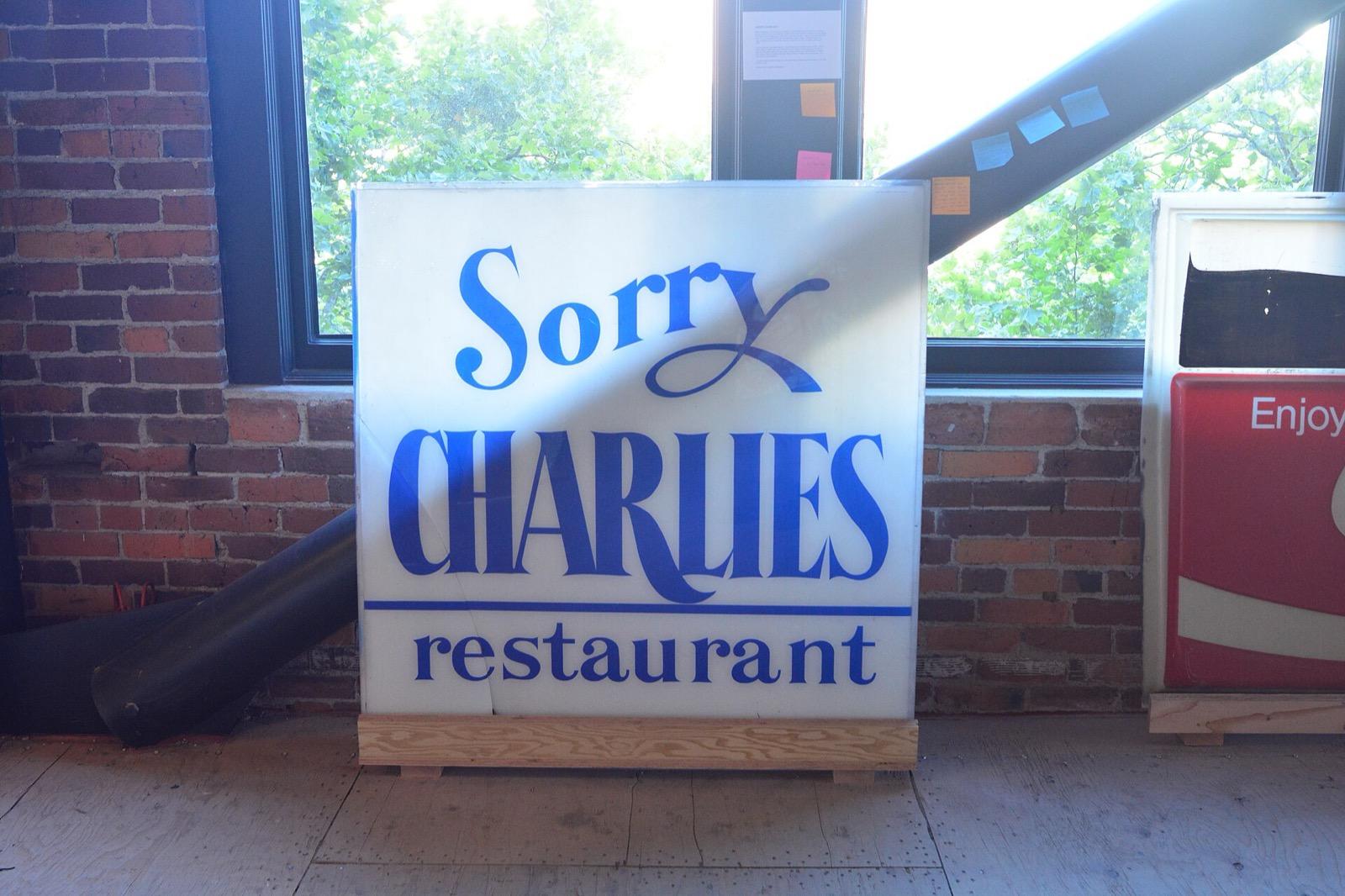
Its lightbox sign spelled out the name in blue: "Sorry" in a looping script over tall, narrow serif capitals, with "restaurant" in small letters beneath a rule. The sign survived the bar and turned up in 2023 in a Vanishing Seattle exhibit at RailSpur in Pioneer Square.
Howard Bulson at the Steinway
From 1987 the piano belonged to Howard Bulson. Originally from Mexico, Missouri, he started lessons in first grade and as a teenager played for a travelling tent evangelist. He came to Seattle in the early 1960s for an office job with a music dealer, and by 1969 he was playing full time, at Gim Ling in the International District, Simonetti's on Aurora and Charlee's on Lake Union, before settling in for 16 years at Sorry Charlie's.
Bulson was known for how many songs he could play and for keeping amateur singers in key. Regulars had their own numbers: one woman always sang "I Love a Piano" and one man "Some Enchanted Evening," while others called for "Honeysuckle Rose," "Moon River," "Danny Boy" and "Send in the Clowns." A singer named Carol Roberts would be cued in with a call of where they were going next. The crowd included local musicians, a former lounge singer named Ruby Bishop who was an old friend of Bulson's, and couples who drove in from as far as Roslyn.
“Keeping Howard was the first thing we really worked on.”
Why Sorry Charlie's closed in 2003
By 2003 Henderson had decided to sell. She told the Seattle Times the regulars were getting older, building in the neighbourhood was pushing up rent and making parking harder, and newer restaurants nearby were drawing customers away, so the bills had become hard to meet. In late June she was not sure of the last night: it might be the following Tuesday, or a few months off. Bulson, then 69, told the paper he had never planned his life and that tomorrow was wide open.
The Mirabeau Room, and Bulson's encore
Jeff Steichen and David Meinert, who both lived nearby, took over the space and spent about eight months rebuilding it top to bottom as the Mirabeau Room, keeping as much of the old room as they could. Steichen said keeping Howard was the first thing they worked on. Bulson stayed at the piano, playing happy hour five nights a week and all night on Sundays, between DJ nights and weekly shows by the burlesque troupe the Atomic Bombshells. A Seattle Weekly writer reckoned his fans would have rioted if he had been dropped.
Sources
- Play me a memory: Last call for Sorry Charlie's piano man, The Seattle Times
- Best Bar Makeover: the Mirabeau Room, Seattle Weekly
- Mirabeau Room review, Seattle Weekly
- File:Seattle - Sorry Charlie's sign.jpg, Wikimedia Commons
The gift shop
The Sorry Charlie's sign on a tee, hoodie and more, each printed to order. All Sorry Charlie's pieces