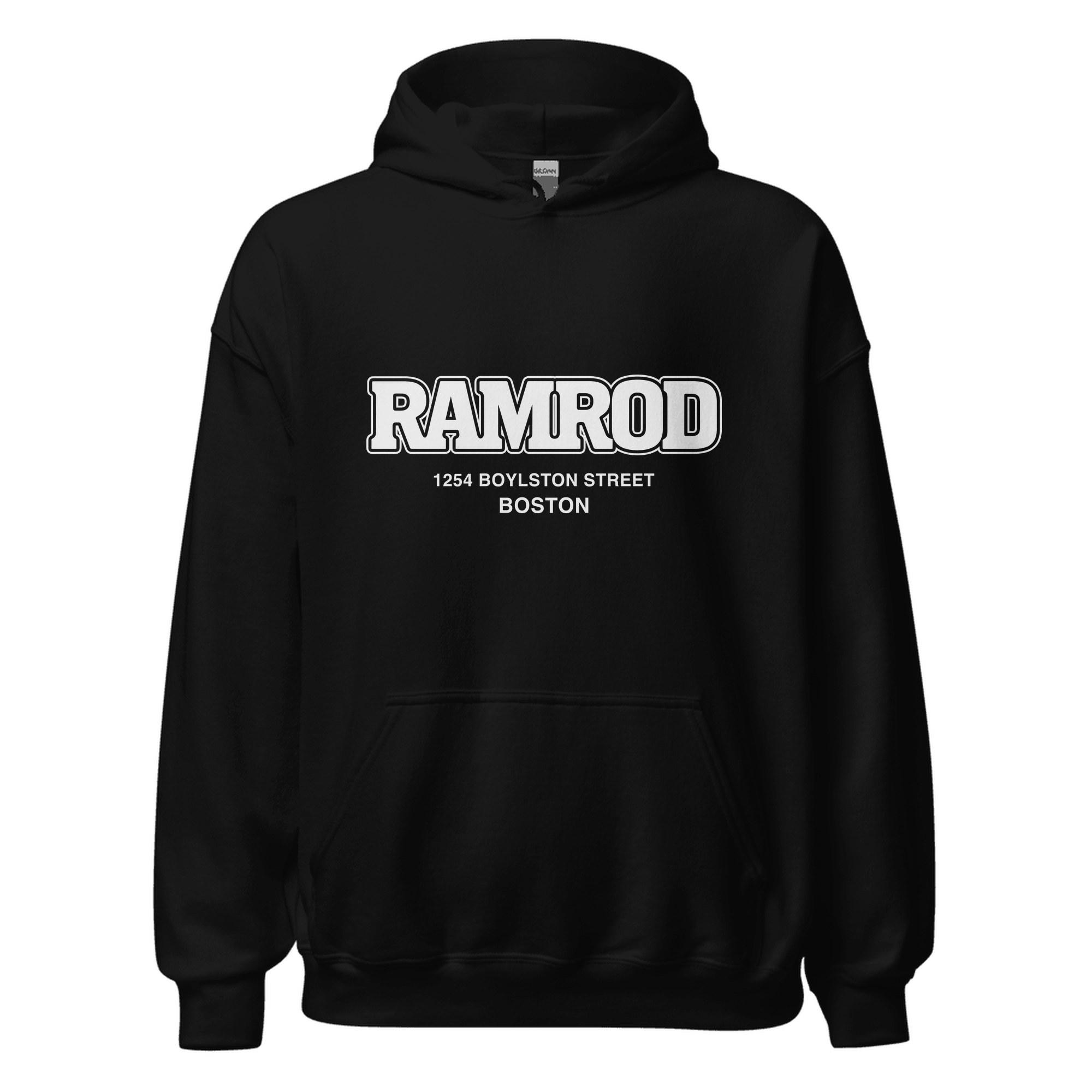
Ramrod / Machine
Ramrod, a leather and Levi's bar from 1981, and Machine, the dance club below it from 1998, shared 1254 Boylston Street in the Fenway until March 2020.
- Where
- 1254 Boylston Street, Fenway, Boston
- Open
- 1981–2020
- Known for
- Leather bar upstairs, queer dance club and drag stage below
- Reading time
- 3 minutes

Ramrod moves to Boylston Street in 1981
Ramrod was a leather and Levi's gay bar that took over the first floor of 1254 Boylston Street in 1981. The building was a low, gray block a short walk from Fenway Park, on a stretch of Boylston that already had a gay history: the 1270, a four-floor disco bar a few doors down, had opened in 1969 and ran until 1988.
For most of its life Ramrod catered to gay men, and it stayed that way after the club downstairs arrived. A 2012 BU Today guide described it as a smaller, 21-and-over room for gay men, sitting above the larger dance club.
Machine opens downstairs in 1998
In 1998 a separate nightclub, Machine, opened in the space below Ramrod. It was a gay club, but it drew a mixed crowd of all orientations and built a loyal following.
By 2012 the main room had a large dance floor, four go-go platforms with dancers on poles, three bars and a Red Bull juice bar, with black leather banquettes around the edges and unisex bathrooms. A back Pool Room held pool tables, arcade games, TV screens and a small dance floor of its own, with free pool on Tuesday nights. Machine did not take credit cards; there was an ATM inside.
The weekly schedule in those years included Machine Friday, an 18-and-over dance night with DJ Darrin Friedman playing Top 40, remixes and house; Show Me Your Stuff, an open drag competition on Wednesdays; and karaoke on Thursdays. Lines on Fridays could run long after 11 p.m.
“Machine was the welcoming committee. It taught people a lot about life.”
Dyke Night, drag and the Gold Dust Orphans
Machine became one of the main stages for queer performance in Boston. It hosted Dyke Night on second Saturdays, All-Star Mondays drag shows, and at least one gay wedding reception. In 2016 the drag performer Neon Calypso won the Next Drag All-Star competition there.
It was also the long-time Boston home of the Gold Dust Orphans, the drag theatre company founded by Ryan Landry more than twenty years before 2019. The troupe staged its shows at Machine for much of the year and spent spring and summer in Provincetown. Staff stayed for years: Donald Smith worked there from 2006 to the end, and Miranda Wrights worked there on and off for 18 years.
The sale to Scape and the last night
In late 2018 the British developer Scape secured the block at 1252 to 1270 Boylston Street, first proposing a 15-story building of around 500 private dorm units for graduate students. Landry told The Arts Fuse in 2019 that he had seen the redevelopment coming for three years. The city asked Scape to acknowledge the area's LGBTQ and arts history, and a performance space was added to the plans.
Staff had watched the building fall into disrepair before the end. Both Ramrod and Machine closed on March 14, 2020, a few days before Governor Charlie Baker's pandemic shutdown order. Few people knew it was the final night, and there was no goodbye party. WBUR reported that the closing came from the building sale and the owners' business decision rather than from Covid-19 itself. In late July 2020 the clubs' manager, Sean Caron, posted that construction permits for the new building had been approved and that the clubs would not reopen.
What is planned for 1254 Boylston
Applications to demolish the commercial buildings at 1252 to 1268 and 1270 Boylston were filed with the city in July 2020. Scape's plan changed after community meetings into a 226,700-square-foot rental building of about 477 apartments over ground-floor shops. It includes the Boylston Black Box, a 10,000-square-foot LGBTQ-focused performing arts space with a 156-seat theatre, to be run on a not-for-profit basis and associated with The Theater Offensive, a company working with queer and trans artists of color.
The History Project, which documents Boston's LGBTQ past, wrote to the city in 2020 in an attempt to save the building. With Ramrod and Machine gone, the Fenway lost the last two queer nightclubs it had.
Sources
- Saying goodbye to queer spots Machine and Ramrod in the Fenway (Nathan Tavares), WBUR
- Nightlife: Machine, BU Today
- Theater News: There Goes the Neighborhood, Gold Dust Orphans to Lose their Fenway Home, The Arts Fuse
- The evolution of queer nightlife in Fenway, The Simmons Voice
- Machine / Ramrod in Fenway to be demolished, BosGuy
- 1252-1270 Boylston Street, Boston Planning Department
The gift shop
The Ramrod / Machine sign on a tee, hoodie and more, each printed to order. All Ramrod / Machine pieces