Omega
Opened in 1976 as the Fraternity House in a 1905 carriage house off P Street, Omega ran for 36 years before closing without warning in December 2012.
- Where
- 2123 Twining Court NW (entrance behind 2122 P Street NW), Dupont Circle, Washington, D.C.
- Open
- 1976–2012
- Known for
- Gay bar in an alley carriage house behind P Street, first called the Frat House
- Reading time
- 3 minutes
A railroad president's carriage house on Twining Court
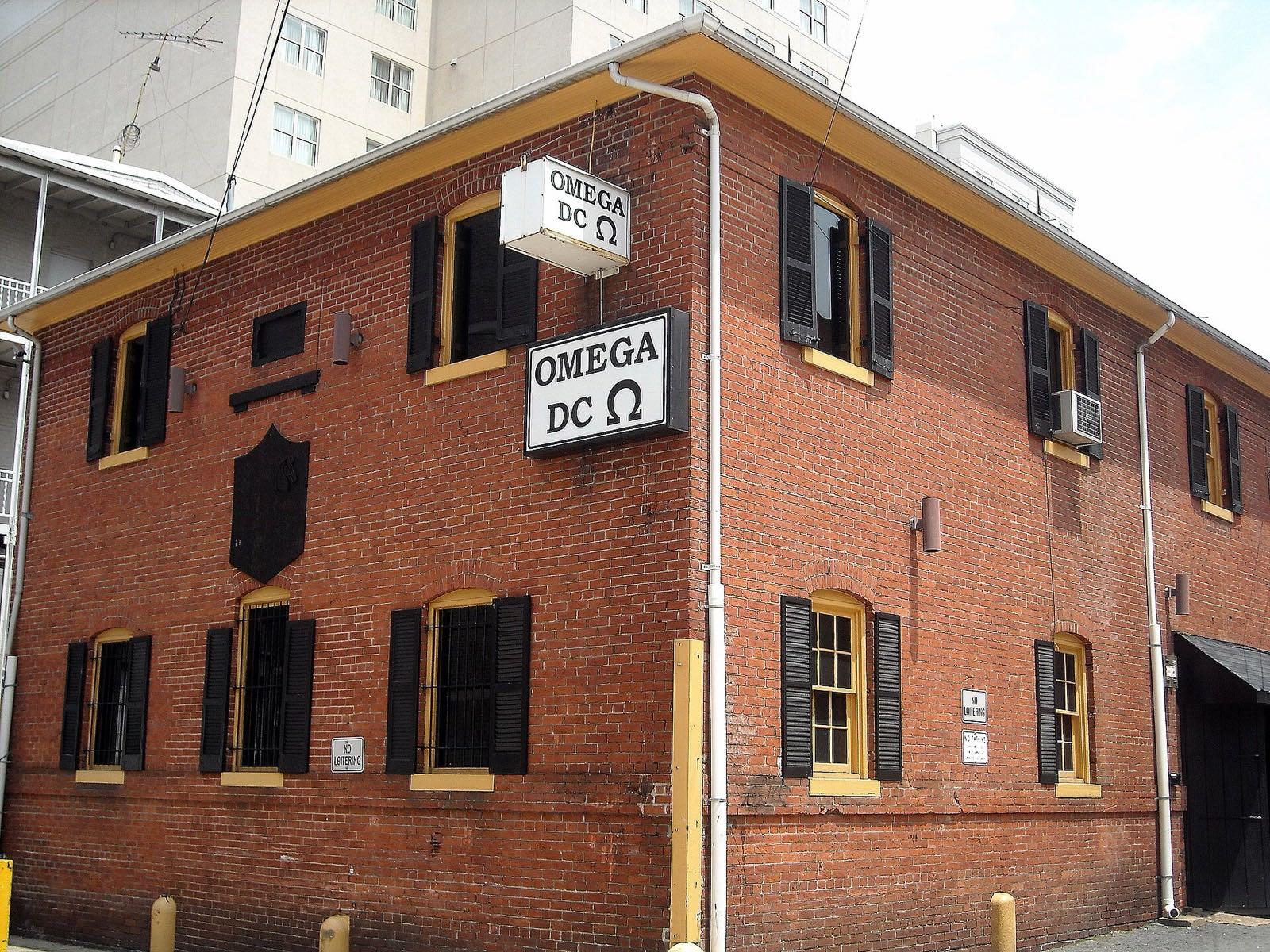
The building that held Omega stands in Twining Court, an alley behind P Street NW just west of Dupont Circle. The Scottish-born builder John McGregor put it up in 1905 as a stable, carriage house and servants' quarters for Samuel Spencer, president of the Southern Railway. Spencer was killed in a train wreck near Lynchburg, Virginia, the following year. The building held up to eight horses, with the butler's and chauffeur's families living upstairs, and by 1919 it had become a garage.
The Spencer family sold it in 1957. Jim Travis, an electrical contractor, opened the Twining Court Stables restaurant there in 1960, with a nightclub upstairs called The Room at the Top. Ray Walters Jr. bought it in 1966, and from 1971 he rented it out as an entertainment space; for a time it was a bar called The Reading Gaol.
The Fraternity House opens in 1976
On September 1, 1976, according to Mark Meinke of the Rainbow History Project, the building reopened as The Fraternity House, a gay bar with a restaurant and a dance floor. It was soon known as the Frat House. The founder was Glen Thompson, who went on to open Badlands, later Apex, further down the alley, and P Street Station, later the Fireplace, across the street.
When the Frat House opened, Metro Weekly reported, the only other gay bar in Dupont Circle was Mr. P's, which had opened a few months earlier. Most of Washington's gay bars were then in the warehouse district in Southeast, near where Nationals Park stands now. Early customers mostly lived on the west side of the circle or in Georgetown. Deacon Maccubbin, owner of the Lambda Rising bookstore, met his partner James Bennett at the Frat House.
“You can't give the bar away every night.”
Omega's rooms, drag nights and regulars
The bar was renamed Omega sometime in the 1990s; Perry Morehouse, its general manager, put the change at 16 or 17 years before it closed but did not know the reason. The business used 2122 P Street as its address in advertising. The building had several levels and rooms. Upstairs was at different times a piano bar and then a back room that showed adult films, and by 2011 it was a brightly lit room with a pool table.
Morehouse had started as a bartender in the late 1970s and ran the place for about 20 years. In 2011 he described Omega's crowd as probably the most diverse in the city and credited the bar's survival to changing with the times. There was a drag show on Monday nights and karaoke on Thursdays hosted by bartender Howard Hicks, whose drag persona Gladys Kravitz was the bar's best-known queen. Chris Smith performed there as Kristina Kelly for about 15 years. On Wednesdays, men who took off their shirts drank free from 10 to 11 p.m.
Morehouse recalled that before amyl nitrate sales were banned, demand was such that for the last 15 minutes before midnight the bar sold little but poppers. The AIDS epidemic took many of the Frat House's older customers, bartenders and drag performers. Visitors over the years included the Village People, Erasure's Andy Bell and the columnist Michael Musto. The bar marked its 35th anniversary with champagne and cake on April 20, 2011.
Why Omega closed in December 2012
Thompson bought the building in 2005 for $2 million; until then the bar had rented it. It went on the market in May 2012. On December 26, 2012, Morehouse told the staff of about 15 that the business was closed and the building sold. There was no farewell party. Morehouse said he had not been part of the decision and had been told only that the business had to be wound up and the premises empty by the end of the year.
He listed reasons trade had slowed: gay Washington had shifted east, and it had become hard to get people to cross to the west side of the circle; as a cruising bar, Omega lost customers to the internet; and fewer gay people needed a gay bar to meet each other. Smith, the drag performer, said the crowd had seemed steady and the news came suddenly.
A private house with the Omega sign
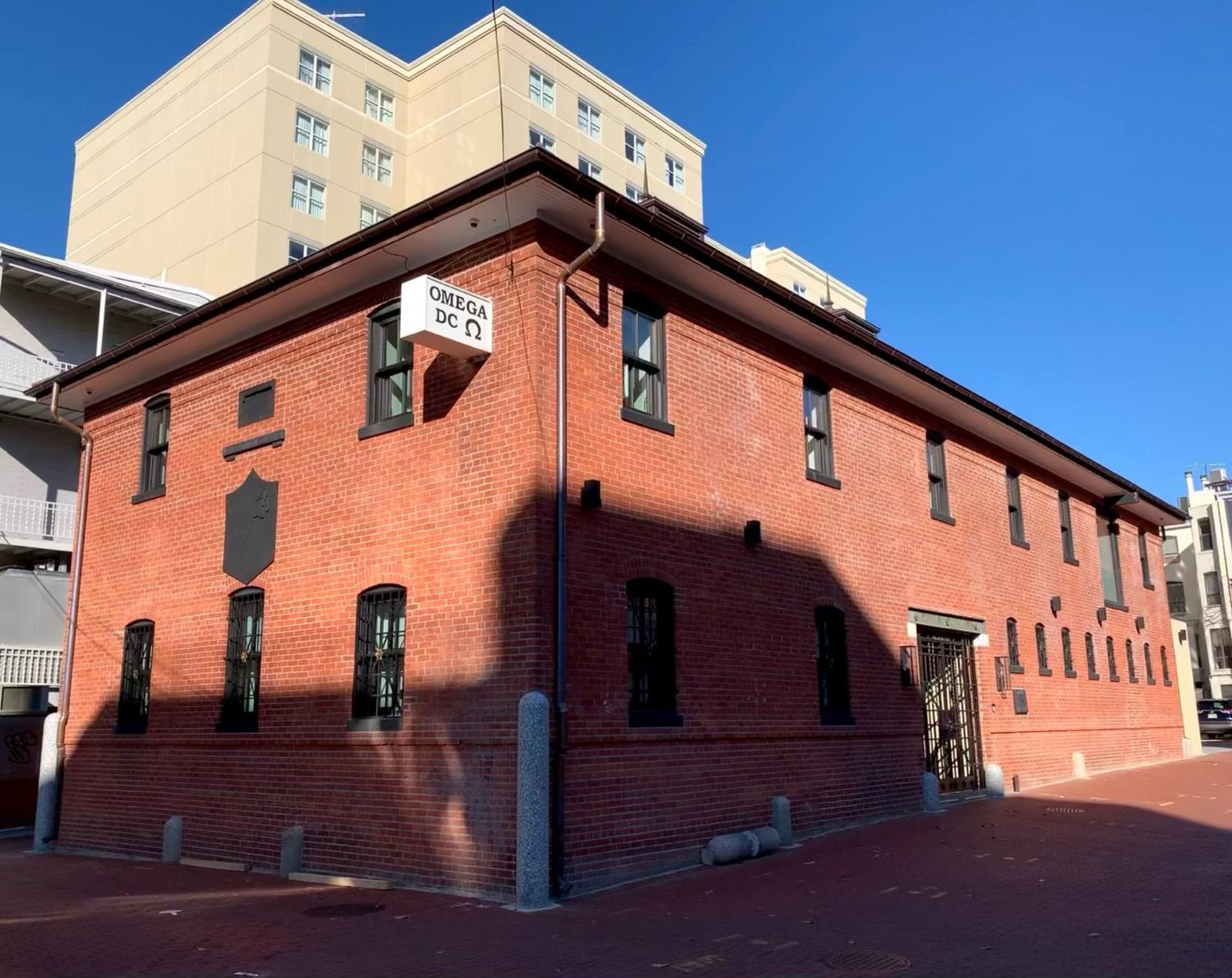
The buyers, a family, paid $1.9 million and planned to turn the building into a single-family house of about 5,850 square feet; the city's Historic Preservation Review Board approved the design. The carriage house had been listed on the D.C. Inventory of Historic Sites in 1995 and the National Register of Historic Places in 1996, and it is a contributing building in the Dupont Circle Historic District. Photographs taken in 2020 show the restored brick building with the white 'OMEGA DC' box sign still hanging on its corner.
Sources
- Omega closes, Washington Blade
- Several factors contributed to Omega closing, Washington Blade
- The Omega Man, Metro Weekly
- Briefly noted: The Twining Court Stables Restaurant, Streets of Washington
- Dupont Circle's Old Frat House To Become Alley Home, UrbanTurf
- Spencer Carriage House and Stable, Wikipedia
The gift shop
The Omega sign on a tee, hoodie and more, each printed to order. All Omega pieces